

ERP Development

The Importance of ERP Development in Today's System Architecture
In remote business settings, operational data is often spread out across many different applications, spreadsheets, and older technologies. This fragmentation leads to data silos, process redundancies, problems with synchronization, and a lack of real-time visibility into operations. A well-designed ERP (Enterprise Resource Planning) system solves these problems by bringing integrated important business functions like finance, HR, procurement, inventory, sales, CRM, and reporting onto one platform that works with other systems.
ERP is the backbone of enterprise architecture because it helps automate processes across departments, standardizes them, and makes sure that data is accurate. When built correctly, ERP makes it possible to exchange data in real time, control access based on roles, create data structures that are ready for analytics, and connect APIs. This lets companies move from making decisions based on how things happen to making decisions based on data while keeping performance, scalability, and security.
What Digital True Technologies Does and Why Making ERP?
At Digital True Technologies, ERP development is more than just putting in software; it's also seen as an effort to build an enterprise system. We focus on making ERP solutions that work well with your current data architecture, IT ecosystem, and long-term goals for growth.
Technologies We Work With:
Strategies We Use for Making ERP

01
Designing operations for systems and business processes
We start with a thorough process mapping to find gaps, redundancies, and chances for automation in the current system. This makes sure that the ERP design shows how things really work in the business instead of forcing changes to the way things are done.
02
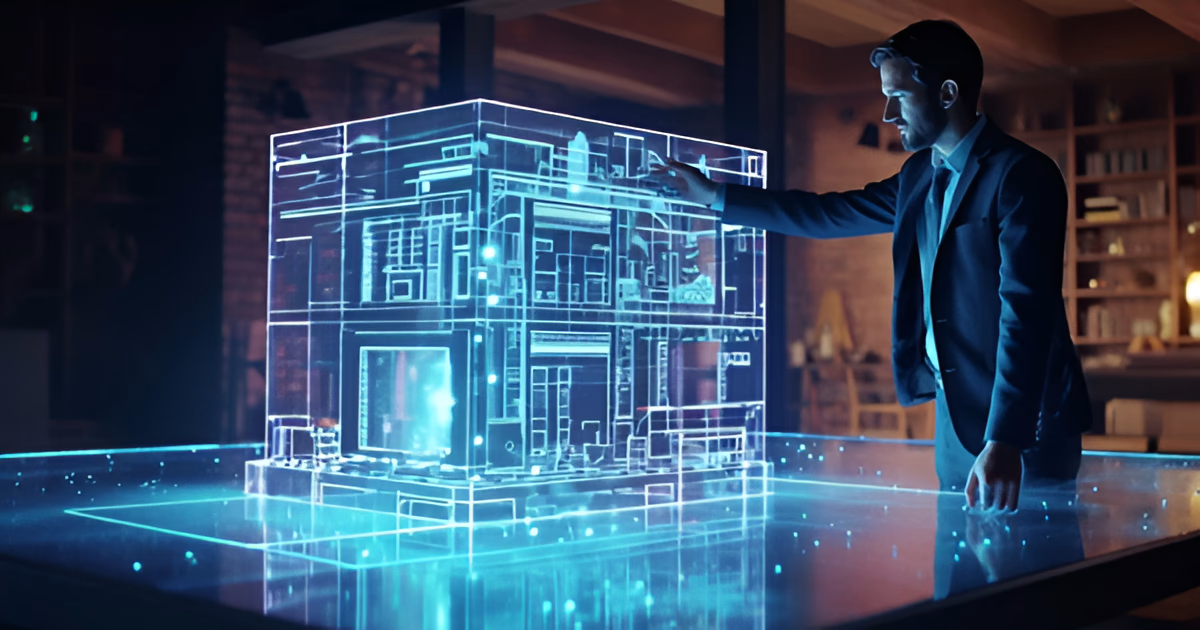
Service-Oriented and Modular Architecture (SOA)
ERP modules, like finance, human resources, inventory, CRM, procurement, and others, are loosely coupled services. This means that they can grow, maintain, and add new features on their own.
03
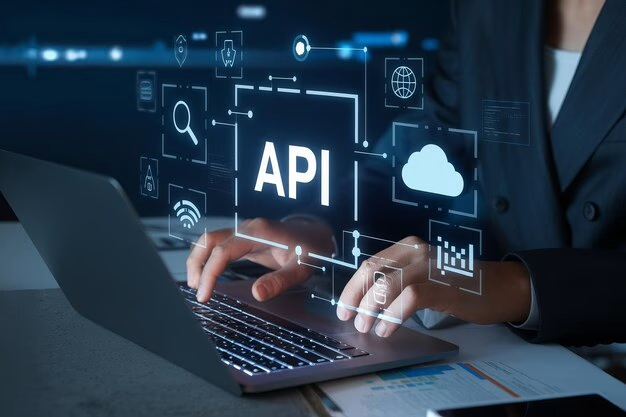
Design that is ready for integration and API-first
We make ERP with REST full APIs to make sure that it can connect easily to other systems, such as accounting software, HRMS, payment gateways, CRM platforms, and old databases.
04
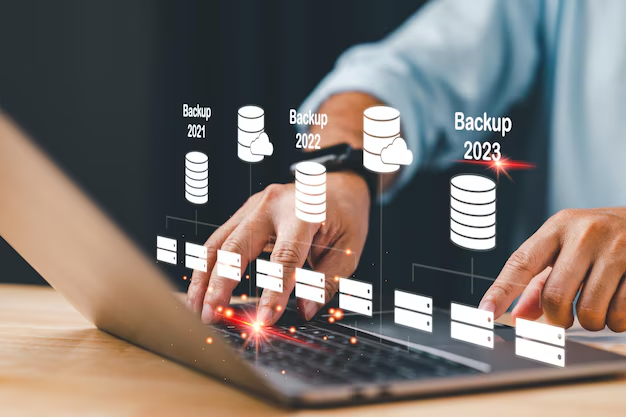
Database Architecture and Data Integrity
Normalized database schemas, transaction logging, data validation layers, and audit trails are all used to make sure that data is consistent and can be traced back to its source.
05
Layers of security and role-based access control (RBAC)
There are granular authorization models, secure authentication methods, encrypted data transfer (HTTPS/SSL), and data practices that are ready for compliance.
06
Deployment that works in the cloud and on mobile devices
ERP solutions are made to work on multiple devices, have backup plans, and have cloud infrastructure that is always available.

07
Planning for Reporting, Automation, and Analytics
We use event triggers, rule-based automation, and real-time dashboards to give management and operations teams useful information.

08
Moving data and changing from legacy systems
Using safe ETL methods that don't get in the way of business operations, old data is moved into the ERP system.

09
Help and optimization that keeps going
After implementation, we offer version upgrades, performance monitoring, and system optimization based on how the system is use.
10
Putting into action rule engines and workflow automation
We add workflow engines to ERP designs that use scheduled jobs, approval chains, event triggers, and rule-based logic to make it easier for departments to work together. ERP is no longer just a way to keep track of things; it's now a way for automated tasks.
Technologies We Work With:
Main Benefits of Our ERP Engineering Method
- A single data model that all systems and departments can use
- Workflows that automate tasks that don't need to be done
- Connectors powered by APIs make systems link seamlessly
- Better readiness for compliance, auditing, and accurate data
- An architecture that can grow with the organization
- Real-time dashboards that provide better operational visibility
- Permission-based secure access to private company information
- Less dependence on multiple disconnected software technologies
Frequently Asked Questions (FAQ)
What technology stack do you use to build ERP systems?
We choose the stack based on what the project needs. This usually includes relational databases (MySQL/PostgreSQL), cloud infrastructure for scalability and dependability, and modern frameworks (Node.js, Laravel, Python, React).
How can you be sure that ERP will be able to grow with the company?
You can scale both up and down without having to start over with the system if you use cloud-ready deployment, modular architecture, and the best database design.
Can the ERP work with both our old systems and our current business tools?
Yes. Our ETL procedures and API-first design make it easy to use with both old databases and new SaaS solutions.
How do your ERP systems keep data safe?
We use secure authentication, audit logs, RBAC, encrypted communication protocols, and the best security practices for servers.
Do you let modules grow and change in the future?
Yes. Our modular SOA design lets you add new modules or change existing ones without hurting the system as a whole.
Custom Session
Custom Session